
Sorry, but we have not yet scrounged up a biography for this person. But we are working on it.
Stefan and Shelley Jackson Read More »

Sorry, but we have not yet scrounged up a biography for this person. But we are working on it.
Stefan and Shelley Jackson Read More »

Sorry, but we have not yet scrounged up a biography for this person. But we are working on it.

I’m a Defence Scientist at Defence Research and Development Canada!
I stand for Space Sustainability and spend my days developing image-processing pipelines and software for Space Situational Awareness. I recently graduated from York University in Toronto with a Master of Science; with my Thesis focused on capturing and extracting photometric and astrometric properties of Resident Space Objects. In my downtime, I explore photography concepts and travel.

Sorry, but we have not yet scrounged up a biography for this person. But we are working on it.

Apart from being a family-friendly eclipse chaser, Adam is also on a quest to find accessible semi-dark sky locations near Ottawa.
Adam is an Ottawa native who finally took the plunge into amateur astronomy in 2019. He is most interested in visual observation and sketching, even in the depths of winter. On cloudy nights, he makes and modifies astro equipment.

Tony has long been interested in the natural world – both terrestrial and celestial; but only tested the astronomy waters in 2022 when he bought a telescope on a whim. Since then he has been enjoying visual observing and astrophotography – both from his Ottawa home, and FLO. He has been a RASC member since 2023, and has enjoyed sharing with, and learning from fellow members.
Tony works in the Aerospace Centre of the National Research Council, and can often be found in Gatineau Park; on foot or on skis!

Mr. Shewan has a Bachelor’s degree in Engineering Science and is a professional engineer with over 30 years experience in satellite communications systems.
He has authored or co-authored numerous technical and regulatory contributions to the ITU-R and has contributed to the development or revision of numerous ITU-R Recommendations and Reports.
He is currently a Principal Consultant with Telecomm Strategies, LLP of Chevy Chase, MD; consultants in the field of satellite communications.

Astronomy Educational Outreach Sep 2018 – Present
Present “Introduction to Astronomy” sessions for Scouts (Beavers, Cubs Scout), Girl Guides (Brownies, Guides, Pathfinders) and seniors.
Presenter – Ottawa Skies this Month
Research and present up and coming astronomical events for the monthly meetings of RASC Ottawa Centre.

Bob is an avid and experienced astro-imager, and a frequent and prolific contributor to the monthly observation reports at RASC Ottawa meetings. He has engineered his own observing platform (more than once). A true Renaissance Man, he blends these mechanistic pursuits with an interest in the history of astronomy, and alligators.
Sorry, but we have not yet scrounged up a biography for this person. But we are working on it.

Native of Alberta with a B.Sc. in Geology, minor chemistry, from U of Calgary 1983.
PhD from Johns Hopkins University 1987 based on a thesis that included 3 year field study of an extinct volcano on the Kenya-Tanzania border.
Specialty is igneous petrology; retired from research scientist at Geological Survey of Canada since 2019, mostly in Nunavut.
Finally acquired a solar scope this winter. Am deathly afraid of magnetohydrodynamics, statistical mechanics, and nonlinear differential equations so I have no business talking about the sun, but it’s too fascinating to avoid.

Taras graduated from Lviv Polytechnic University in Ukraine, majored in Computer Science; currently work in IT as Senior Web Developer; RASC member since 2015; interests – astrophotography and visual observations, got some hands-on experience in planetary photography. Remembered for forgetting to remove my solar filters during 2017 total eclipse while imaging.
Experienced Web Developer with a demonstrated history of working in the telecommunications industry. Highly skilled in PHP, Magento, MySQL, Perl, JavaScript, jQuery and Ajax. Strong engineering professional.

An active Ottawa Centre member and visual discoverer of four comets. He received the Chant Medal in 1979.
David Levy’s tribute to Rolf is available at https://skyandtelescope.org/astronomy-news/rolf-g-meier-1953-2016/

Member of the Law Societies of Nunavut (2016) and LSUC (2014)
Admitted to practice in 2012: Supreme Court of the Australian Capital Territory; High Court of Australia and High Court of New Zealand
After completing high school in Ottawa, Roman Dzioba when on to Carleton University from which he holds a B.A. in Interdisciplinary Studies (2005) and a M.A. (International Affairs-2008). His academic journey brought him to Canberra, Australia, where he was the first person to receive a Juris Doctor in 2010 from the Australian National University. He lived in Australia for 7.5 years and became an Australian citizen in 2014.
During that time, he worked for the North Australian Aboriginal Justice Agency, the Legal Aid Western Australia, the Aboriginal Family Law Services (on secondment from Legal Aid) and the Office of the Parliamentary Counsel.Shortly after returning to Ottawa in the summer of 2015, Roman opened his own practice offering legal services in criminal, family and civil law. After spending over a year in private practice, he moved to Iqaluit for a new opportunity and joined the PPSC in October 2016. Roman’s volunteer commitment to the Law Society began in 2017 when he was appointed to the Law Society’s Unauthorized Practice and Ethics Committee. Roman was the Law Society’s Secretary-Treasurer from September 2017 until May 2.
Amateur astronomer The Royal Astronomical Society of Canada (RASC) 1990 – present 30+ years
Ottawa-Carleton District School Board (OCDSB) Teacher
2001 – Sep 2018 17 years teaching Senior Physics and Junior Science, some Math and Computer Science courses. Ontario curriculum: SPH4U, SPH3U, SPH4C, SNC1P, SNC1D, SNC2P, SNC2D, MPM1D, MBF3C, ICS2O
De La Salle University Manila Part-time Lecturer
2007 – 2008 1 year Lecture course in Physics for non-Science majors, First and Second-year laboratory courses for Physics and Engineering students.
Manila Science High School Part-time teacher
2006 – 2008 2 years Special interest course and contest preparation in Lego robotics.

Richard Alexandrowich runs monthly meetings of the Champlain Library Astronomy Club. His love for astronomy began when he was nine years of age, when his parents bought him a two-inch refracting telescope and since then, he has never looked back. A self-taught astronomer, he has been a member of several astronomy clubs in Montréal, Ottawa, and Eastern Ontario.
Amateur astronomy is growing in leaps and bounds. Now that the next generation space telescope is up and running, sky watchers will be treated to more cosmic ‘eye candy’. One glance at the internet will convince many that the hobby is not as obscure as it once was.
“Backyard astronomy has evolved into a cerebral and visual adventure,” Alexandrowich says. “All one requires are a few good, non-technical books, a pair of binoculars, or if you plan to tackle the deep sky, a modest scope, membership to a local astronomy club, where you can meet like people who share the same interest, and most important, a passion for the sky.”
For more information contact the Champlain Library by phone at 613-678-2216, or by email at library@bc-cl.ca.
Richard Alexandrowich Read More »

Sorry, but we have not yet scrounged up a biography for this person. But we are working on it.

Professor René Doyon’s research activities are focussed on the development of state-of-the-art astronomical instrumentation for various ground- and space-based observatories. He is also actively involved in various observational programs for detecting and characterizing brown dwarfs, exoplanets and young low-mass stars. On the instrumentation front, he leads several infrared instrumentation projects (camera and spectrograph) for the Observatoire du Mont-Mégantic. He is co-investigator of the Gemini Planet Imager, which has been operational since 2013.
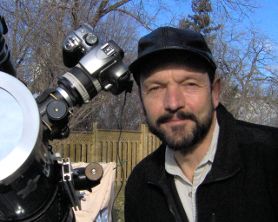
Paul Klauninger is a graduate of the University of Toronto, where he studied Astronomy, Astrophysics, and Earth Sciences. He has been passionate about astronomy since childhood and involved in astrophotography for over 30 years. Paul has lectured on astronomy, astro-imaging, and space travel at the Canada Museum of Science & Technology as well as teaching undergrad astronomy at Carleton University. Paul is a regular guest speaker on astronomical imaging at Carleton University and has also conducted astronomy workshops and school outreach activities for the Ottawa Board of Education.

I manage all financial matters of the Centre including:

Mick is Australian. Despite this handicap, he had a 25-year career with the United Nations – and 30 years living in East Africa – then retired to come to Ottawa. Originally hailing from southeastern Australia (Warragul – look it up!) , Mick obviously has rocks in his head, being the only Australian ever to have voluntarily retired to Ontario, least of all from equatorial Africa.
Mick has a genetic predisposition for space-nerdiness. He grew up under the unparalleled skies of the southern hemisphere and, according to his mother, was an 8 year-old lecturing friends and neighbours about things astronomical on balmy summer nights. He also woke up his mother at 4 in the morning to see Halley’s comet in 1986, and dragged his parents to places like Parkes and Siding Springs, Greenwich and Jodrell Bank. He has lived and breathed space stuff ever since, having studied cosmology and astrophysics during his degree course and maintains keen interest in current developments and debates.
Mick prefers cats to dogs but has cared for plenty of both. He more prefers wombats and quokkas.

Michael Watson is a partner in Gowling WLG’s Toronto office, practising in the area of corporate and commercial litigation, administrative law, and employment and labour relations.
Michael is an experienced amateur astronomer and astrophotographer, has held various executive positions as a member of The Royal Astronomical Society of Canada, and as its legal counsel.

Malcolm Loro is an avid astro-photographer and has been a member of RASC Ottawa since 2023, where he has presented on techniques for narrow-band photography and image processing.
His passion for astronomy began in childhood, inspired by views through his father’s homemade Newtonian telescope.
When not wishing for clear skies he can be found on his bike, at the curling club or at his piano.
His latest astrophotography work can be found at [his Astrobin profile] https://www.astrobin.com/users/Waxing_and_Waning/
We all know Gordon Webster as our AstroNotes editor, former President, FLO star party organizer and someone who occasionally shares astro-sketches at our monthly meetings.
Gordon is too modest to promote himself, but his videos on YouTube on sketching with coloured pencils I’m confident will be of interest to members. For example, he recently created a video on sketching the Moon that shows his talent. You can find this video on YouTube here, and the entire list of videos he has created here. Thank you Gordon for sharing.

David J. Shuman, Montreal Centre Past President and long-time member of the RASC, is a professional Graphic Designer with an interest in Astronomy, Photography and Public Outreach.

Astro-photographer capturing and portraying the real colours of the cosmos.
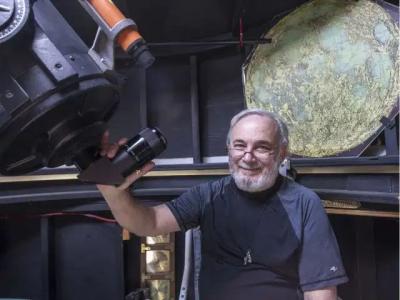
Ottawa astronomer and educator Brian McCullough’s introduction to space occurred when he was seven or eight and living at CFB Rockcliffe. “I remember my dad hauling us out into the grass of the backyard in our PJs to watch a satellite going over.”
His interest, however, was torqued in 1968 with Apollo 8’s Christmas Eve manned orbits of the moon that resulted in the first Earthrise photo. On that night, the mission’s three-man crew of Frank Borman, James Lovell and William Anders took turns reading verses from the Book of Genesis, while McCullough looked on from his backyard, almost in disbelief. “The farthest anyone had been from Earth at that point was about 1,200 nautical miles, and now they’re a quarter of a million nautical miles downrange and have gone into orbit around another body.
“It was pure theatre,” he recalls. “I was 16 years old and that was blowing my mind.”

Bob Hillier has 33+ years of experience in all areas of technology research, development, manufacturing and deployment including software development, hardware development, product test, configuration management, software release management and application integration.
Other projects have included business transformation, records and email management standards and non-profit event management.
Mr. Hillier is PMP, CSM and ITIL certified and has worked in a PM role for more than 20 years. In addition to his regular day-time PM work Mr. Hillier is a Project Management professor

I have worked on direct detection and detailed characterization of exoplanets using extreme adaptive optics (ExAO) as a key science case of both current and future telescopes.
However, both quasi-static and residual atmospheric wavefront errors currently limit the sensitivity of this endeavour, generating speckles” in a coronagraphic image that initially obscure any faint exoplanet(s) from detection. I demonstrated the current limits of exoplanet imaging using datasets taken with the Gemini Planet Imager and Subaru Coronagraphic ExAO systems. Even when using advanced post-processing algorithms, speckle evolution over time and wavelength was shown to limit the final contrasts that can be reached with current state-of-the-art instruments.
A new approach was thus needed to detect fainter exoplanets below these limits.I then illustrated a path forward to reach near-photon noise-limited contrasts: fast focal plane wavefront sensing of both quasi-static and atmospheric speckles. My new method, called the Fast Atmospheric Self-coherent camera Technique (FAST), was designed precisely to overcome these limitations. Looking toward the future, the contrast improvements from fast focal plane wavefront sensing techniques such as FAST are expected to play an essential role in the ground-based detection and characterization of lower mass exoplanets.

Sorry, but we have not yet scrounged up a biography for this person. But we are working on it.

I am a full time student in software engineering at Polytechnique de Montréal. I started programming about 10 years ago and founded my Web development company a few years later https://lbacreations.com/.
I recently co-founded my new startup Sofia Tutors.
I am currently doing my second internship at Microsoft.
Loïc Bellemare-Alford Read More »
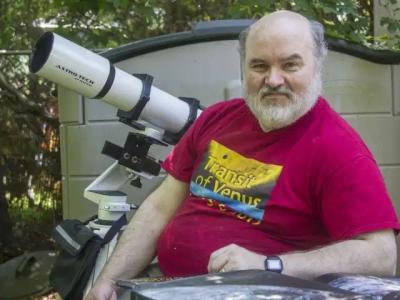
Past president of the Royal Astronomical Society of Canada’s Ottawa chapter, Tim Cole describes himself as a lunatic with a romance for the sky. He paraphrases science fiction author Jerry Pournelle in describing his discouragement over the cancellation of Apollo missions 18, 19 and 20, and the end of the program in 1972: “I never thought I would live to see the first man walk on the moon, but I sure as hell didn’t think I would live to see the last one.”
“That was my attitude and disappointment,” Cole recalls. “How could we NOT keep doing this? And then I realized — because we did it. The job is done. It’s over.”
Cole was born in Harbour Grace, N.L. in 1958, the same year, he points out, that NASA was born. The first book he asked his parents to buy him was What Is a Rocket? when he was four. The next was the How and Why Wonder Book of Stars. As a youngster, he built numerous aircraft and space models, including the Saturn V rocket, lunar and command modules, and one of Gemini 4 astronaut Ed White’s famous 1965 tethered spacewalk, the first by an American. When he was eight, Cole sent away to NASA for a package of maps, photos and other space-related material. On one wall of his bedroom was a technical drawing of the Saturn V rocket that stretched from knee level to the ceiling. He joined a science book club.
Growing up in the Apollo Era, Tim has been fascinated with space and astronomy for as long as he can remember. After working as a professional engineer for many years, he shifted careers to writing and illustration and has been active in science education and outreach, working as a educator and content developer for the Canada Science and Technology Museum and the Canada Aviation and Space Museum.
When not involved in astronomy-related activities, Tim is an avid reader, an electronics and software tinkerer, and an enthusiastic amateur in military history and the history of nuclear energy.

Sorry, but we have not yet scrounged up a biography for this person. But we are working on it.
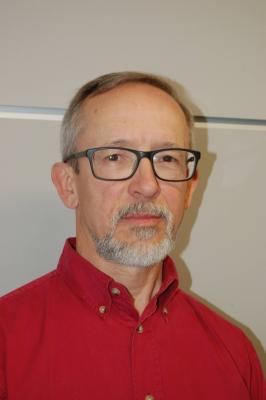
Rick’s interests in astronomy cover many fields: he has observed or imaged over a hundred comets, measured the rotation periods of asteroids, imaged trans-neptunian objects and gamma ray burst afterglows, timed exo-planet transits, and completed the Williamson Lunar Certificate, Lunar 1000 Challenge and the Finest NGC certificate.
But photometry – the measurement of the brightness of objects in the heavens and the basis of much of our knowledge of stars and the universe- has been Rick’s focus since building his first observatory in 2007, especially RR Lyrae stars with over 70,000 images. He continues to work at improving the quality of his photometry, developing new observing techniques, writing scripts to reduce the workload and building yet another telescope to collect more data.

Andrea is an Ottawa lawyer by profession and a long time eclipse chaser and amateur astronomer.
Years of star hopping left her unprepared to handle her spanking new computerized telescope. This lay quiet and undisturbed in her basement while she raised her children. However during the lockdowns of the Covid pandemic she set up the scope in her basement and stayed there until she ran through every possible menu in the hand controller.
Andrea enjoys astrophotography of every kind from solar system objects to far away galaxies. Her work has been published various astronomy publications and has won awards. She has completed several RASC astronomical certifications.
She is very grateful to her dear husband who is always willing to provide good company, as well as safety and security during her astronomical adventures.
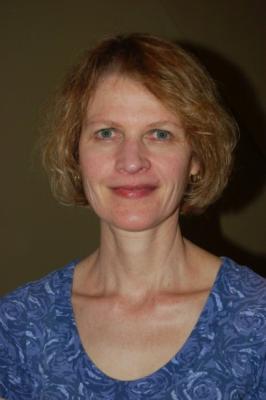
Carmen Rush is a retired high school math teacher who has been a member of the RASC Ottawa Centre since 1984. She enjoys researching the lives of famous and not-so-famous astronomers and has given numerous talks on the history of astronomy to the Ottawa Centre.

Sorry, but we have not yet scrounged up a biography for this person. But we are working on it.

Sorry, but we have not yet scrounged up a biography for this person. But we are working on it.

(From Astronomy Magazine, 2010) The field of astroimaging has exploded with equipment choices. One recent entry is the Ceravolo 300 Astrograph. Veteran amateur astronomers will recognize the name Peter Ceravolo, renowned optical designer who has designed and built systems for more than 30 years. He began Ceravolo Optical Systems in 1994. The company built the optics for Canada’s Microvariability and Oscillations of Stars (MOST) space telescope. It also produced a line of Maksutov-Newtonian telescopes optimized for high-resolution visual work.
In 2003, Ceravolo saw a need for wide-field imaging that took advantage of large CCD chips. The first product of that work is the 300 Astrograph, and I jumped at the chance to test it.

Glenn LeDrew has been an avid amateur astronomer since the age of thirteen.
For many years of his adult life he worked for Environment Canada as a weather observer, weather station manager, and ice analyst.
His astronomical travels have carried him in Australia, Baja California, and Arizona.
Since 1996 he has run his own business, The Starry Room, which takes a portable Starlab planetarium around eastern Ontario. It features an artificial star projector and photographic all-sky projector, both of his own design. So far, about 25,000 people have experienced his indoor universe.
